Masud Pathik, PhD

Cinema

He calls his way of filmmaking raw realism: poetic cinema shot on real land, with real water, among the people who live there.

Films

Each of his films began as a poem: his own, or one by a poet he loves.

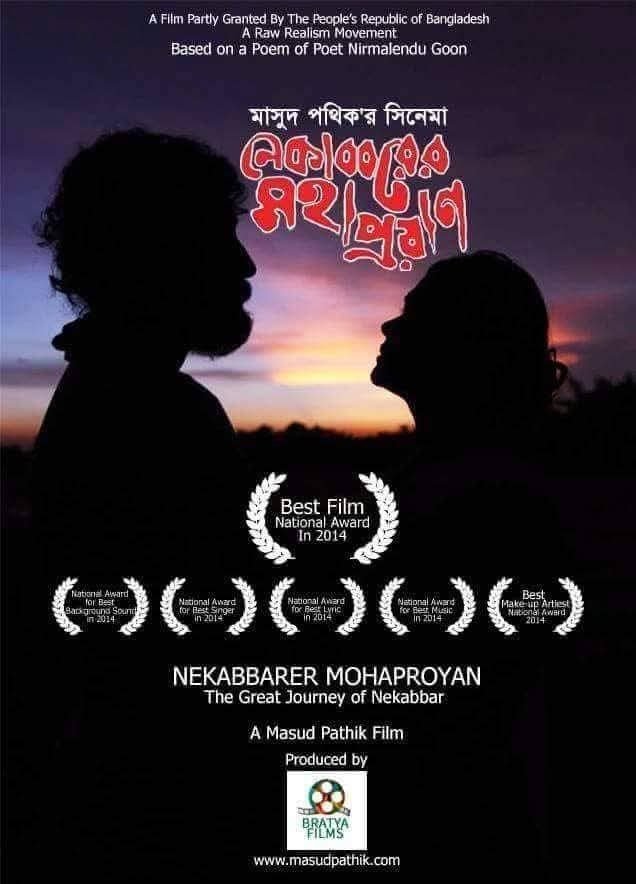
Poster for Nekabborer Mohaproyan: a man and a woman in silhouette against a sunset sky, with the film’s National Film Award laurels

Nekabborer Mohaproyan

The Great Departure of Nekabbor. 2014.

Made from Nirmalendu Goon’s poem of the same name. Written and directed by Masud Pathik, who also wrote the lyrics. Produced by Bratya Films (now Bratya Creation).

National Film Award for Best Film and Best Lyricist (“Nishipakkhi”), honoured in six categories in all. Best Director at the International Independent Film Festival, UK, 2016.
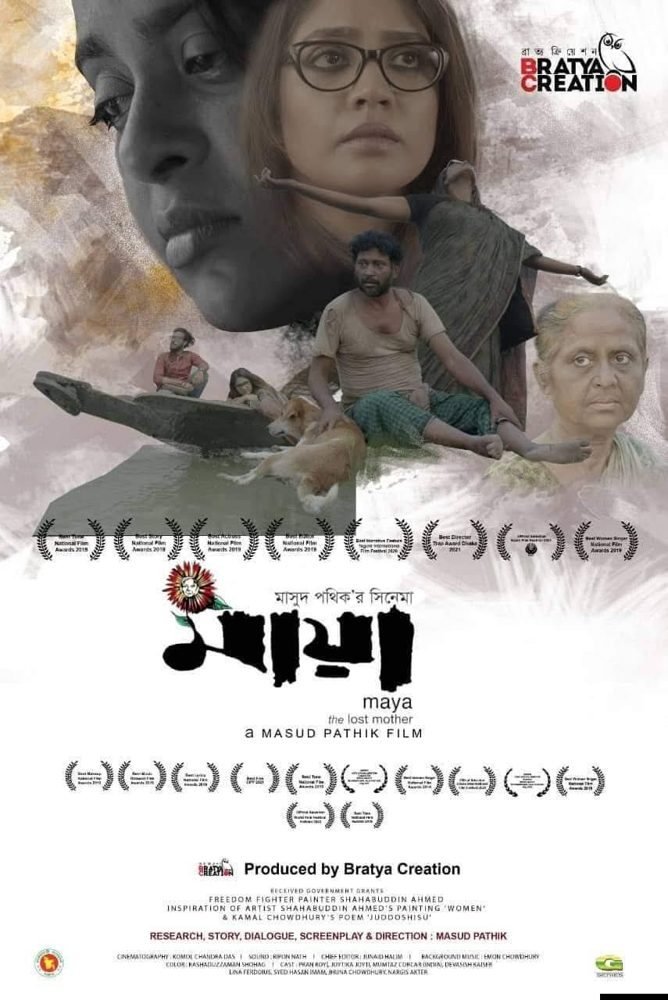
Poster for Maya: The Lost Mother: the faces of the cast above a man and a dog by a boat, ringed with festival and National Film Award laurels

Maya: The Lost Mother

2019, 110 minutes. Research, story, dialogue, screenplay, direction and production by Masud Pathik, for Bratya Creation, with a government grant.

Built from true stories of the Birangana women and the war children of 1971, after Shahabuddin Ahmed’s painting “Women” and Kamal Chowdhury’s poem “War Child”.

A record ten National Film Awards in eight categories, including Best Story. Screened at about fifteen festivals, among them Dhaka, Nashik and Delhi, the SAARC Film Festival, the Toronto Multicultural Film Festival and the World Film Festival Kolkata. Best Narrative Feature at the Tagore International Film Festival and Best Narrative Film at the Indo Asian Film Festival.

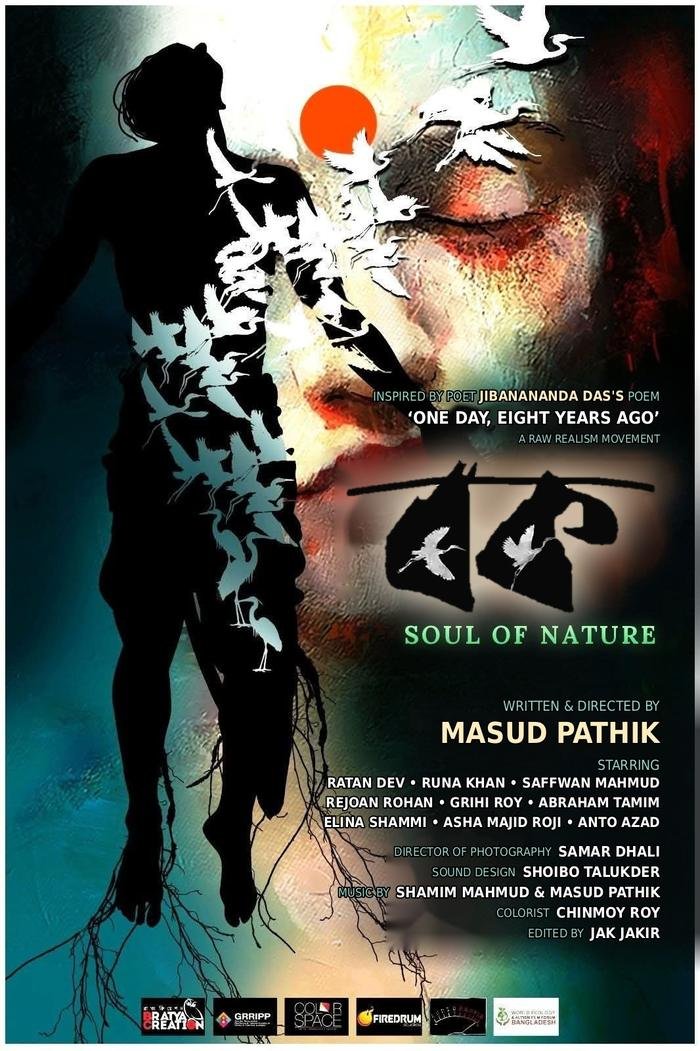
Poster for Soul of Nature: BOK, a dark silhouette of a woman made of white cranes, roots growing from her feet

Soul of Nature: BOK

2026, 87 minutes, 4K. Bengali with English subtitles. On the festival circuit.

A poetic feature drawn from Jibanananda Das’s poem “Eight Years Ago One Day”, about nature, ecofeminism, folk philosophy and the bond between the human unconscious and the living world. Its language is poetic cinema, eco-metaphoric realism and raw realism.

With Ratan Dev, Runa Khan, Saffwan Mahmud, Rejoan Rohan, Grihi Roy, Abraham Tamim, Elina Shammi, Asha Majid Roji and Anto Azad. Cinematography by Samar Dhali, sound by Shoibo Talukder, music by Shamim Mahmud and Masud Pathik, colour by Chinmoy Roy, edited by Jak Jakir. Story, screenplay and direction by Masud Pathik; co-writer Areeb Anusurzzo. Produced by Bratya Creation, co-sponsored by GRRIPP, London.

Official trailer.

From the set

Soul of Nature: BOK was shot on the haor wetlands and river chars of Bangladesh, with the people who live there.

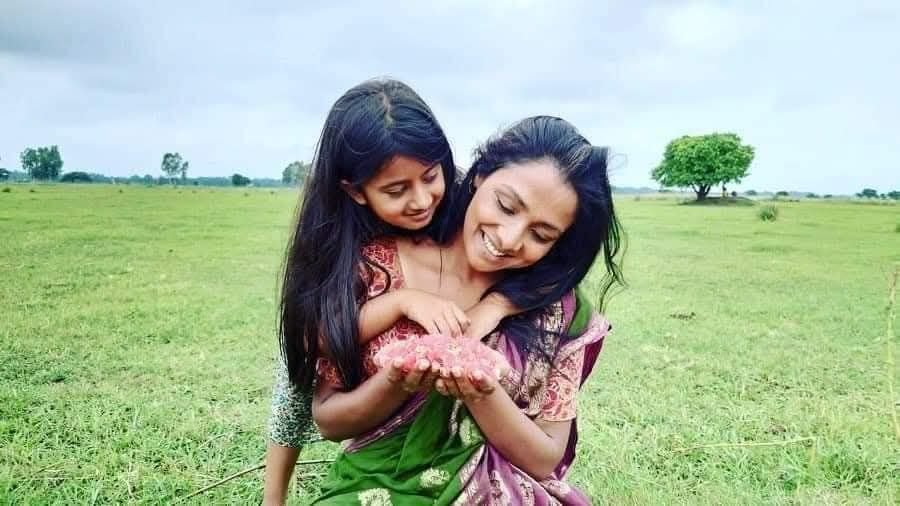
Film still from Soul of Nature: BOK: a mother and her daughter laughing in an open green field, holding red seeds in their hands
Runa Khan as Sabita and Grihi Roy as Shefali, Soul of Nature: BOK. Film still.
The director behind the camera rig, during the making of Soul of Nature: BOK
The director behind the camera rig.
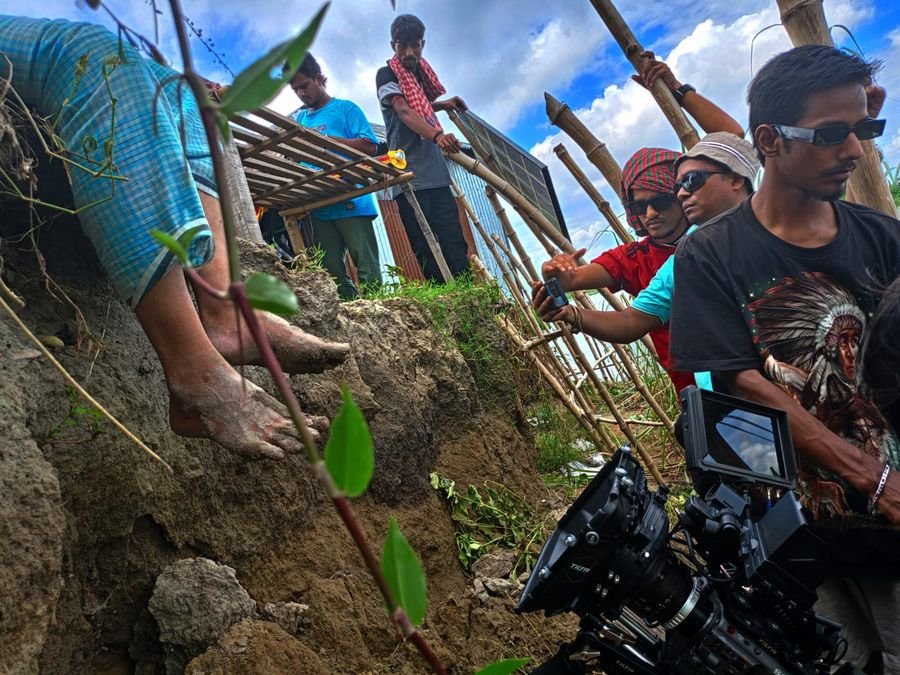
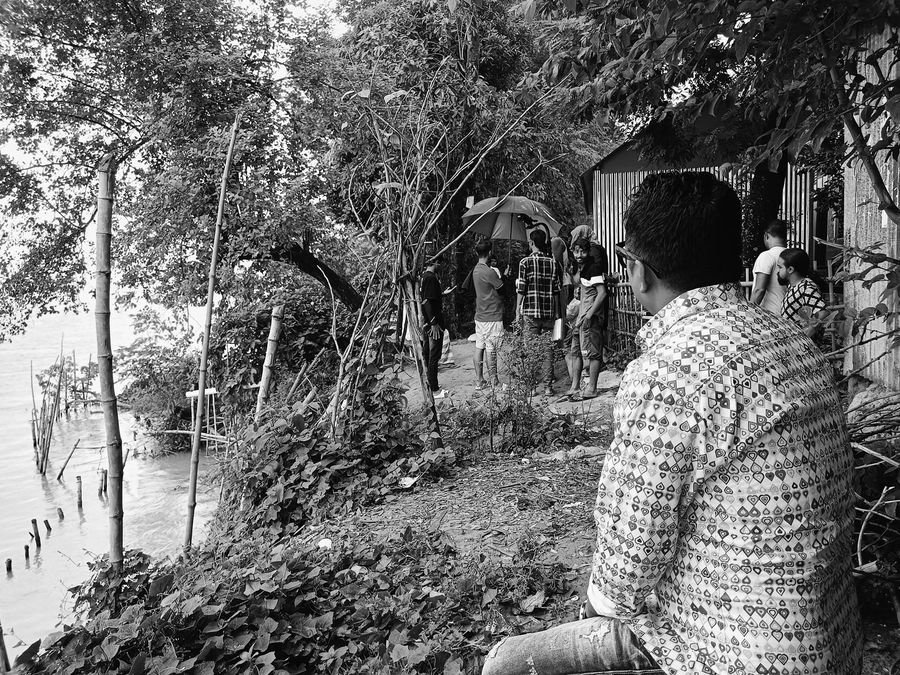
Shooting on the eroding riverbank, during the making of Soul of Nature: BOK
Shooting on the eroding riverbank, where the land of the story was falling into the river.
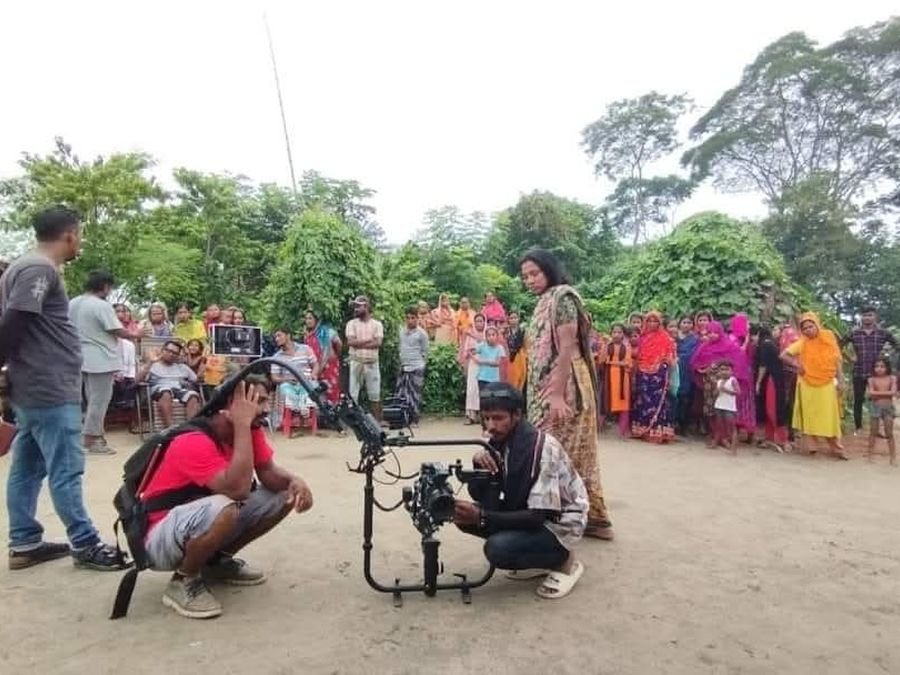
The village gathers to watch a take, during the making of Soul of Nature: BOK
The village gathers to watch a take.
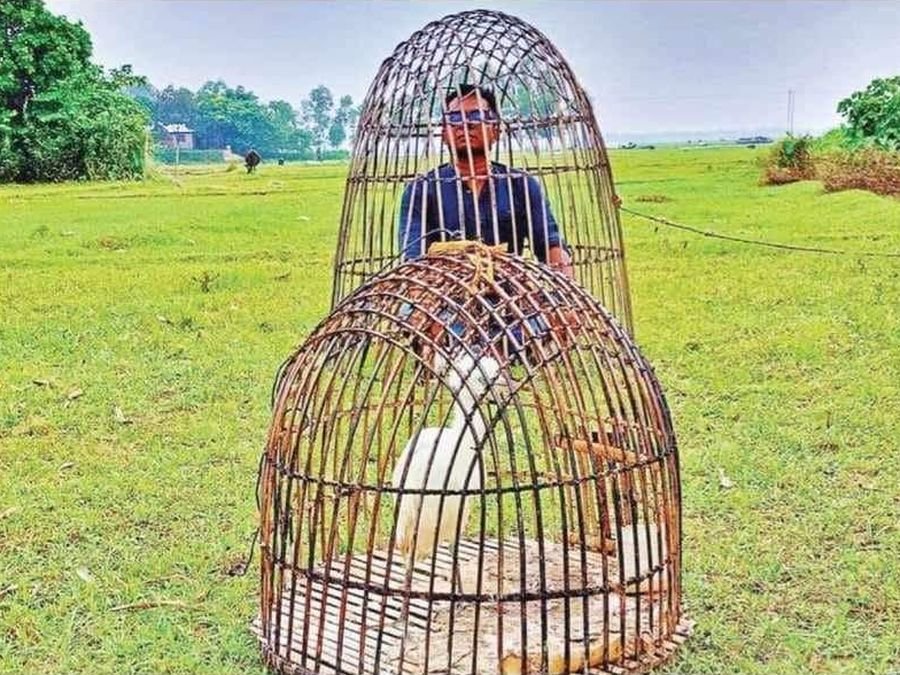
The cage and the egret, during the making of Soul of Nature: BOK
The cage and the egret: in the film, the bird is the soul of nature.
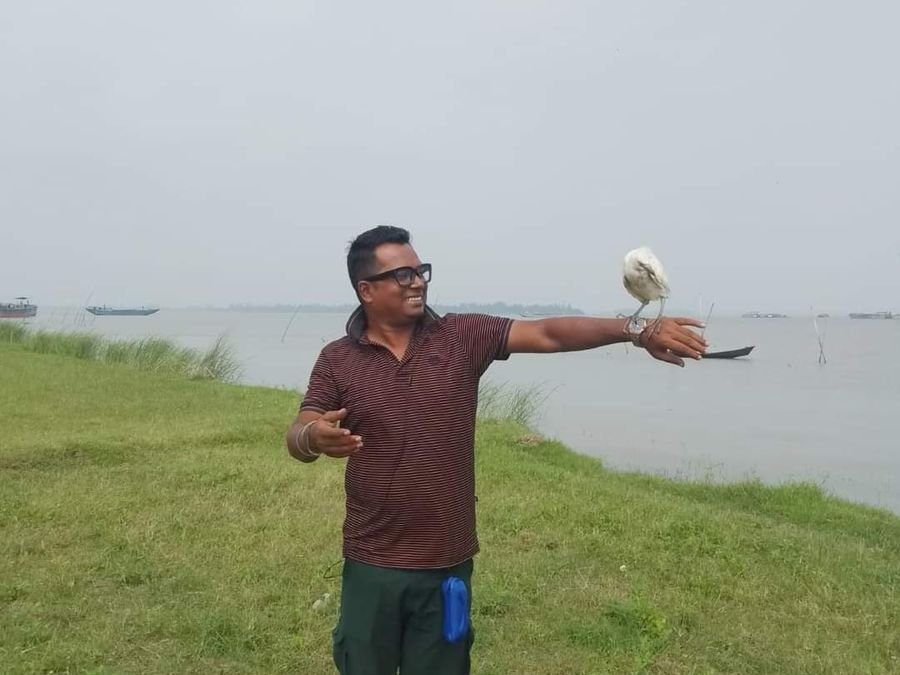
The director with the film’s egret, during the making of Soul of Nature: BOK
The director with the film’s egret.
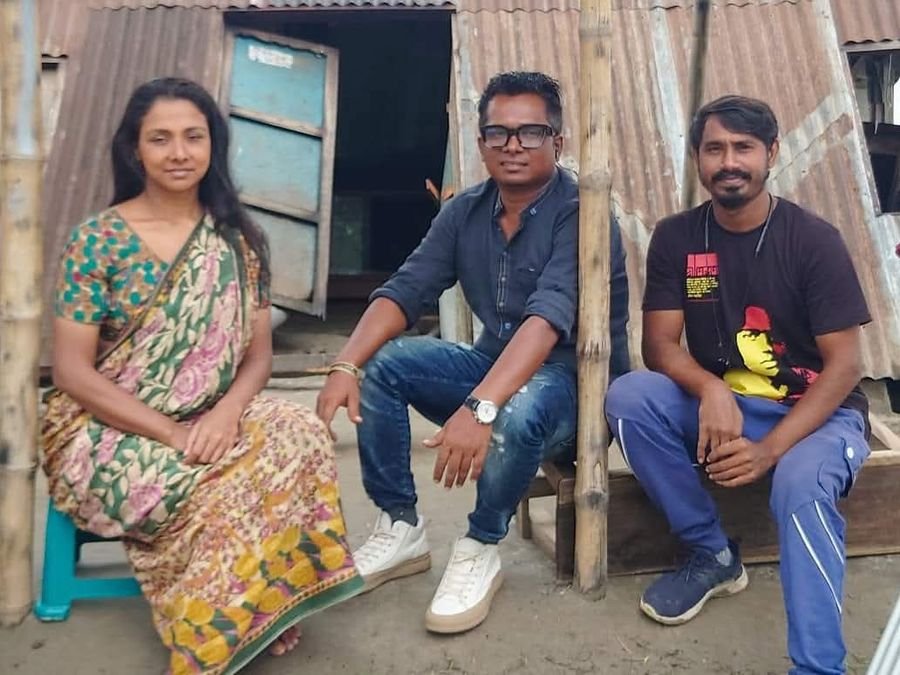
With the cast on location, during the making of Soul of Nature: BOK
With the cast on location.
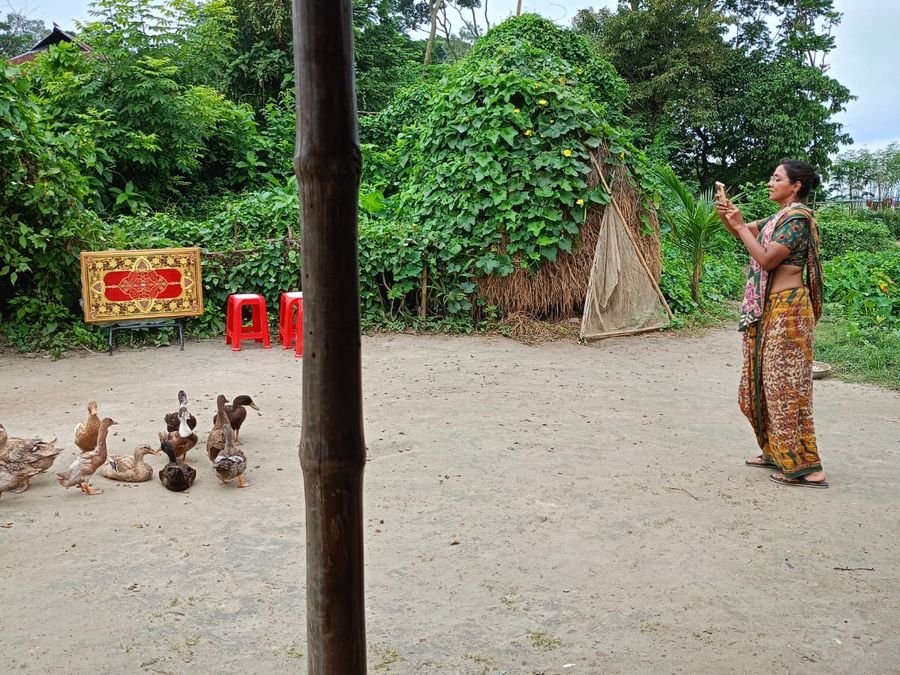
Between takes, the courtyard set, during the making of Soul of Nature: BOK
Between takes, the courtyard set, with the family’s ducks.
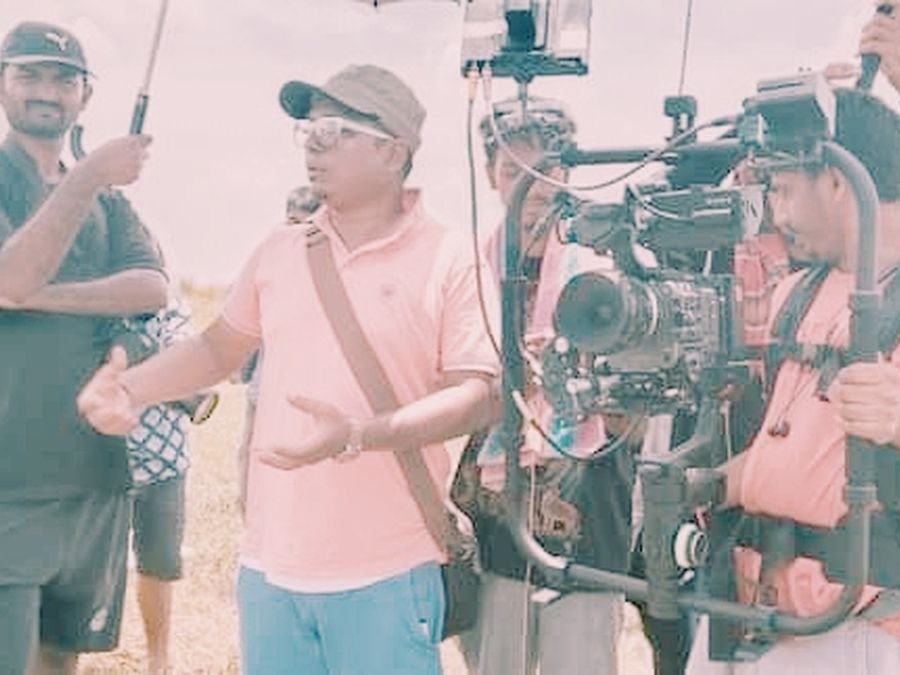
Briefing the camera crew, during the making of Soul of Nature: BOK
Briefing the camera crew before a take.
Watching the set from the river, during the making of Soul of Nature: BOK
Watching the set from the river.
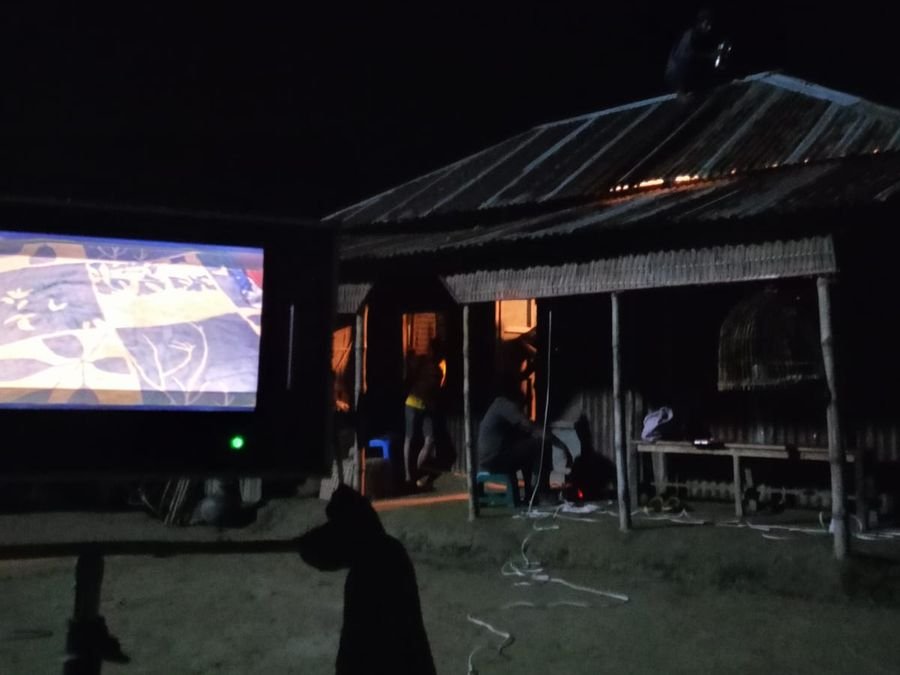
Night shoot, during the making of Soul of Nature: BOK
Night shoot on the char, playback on the monitor.
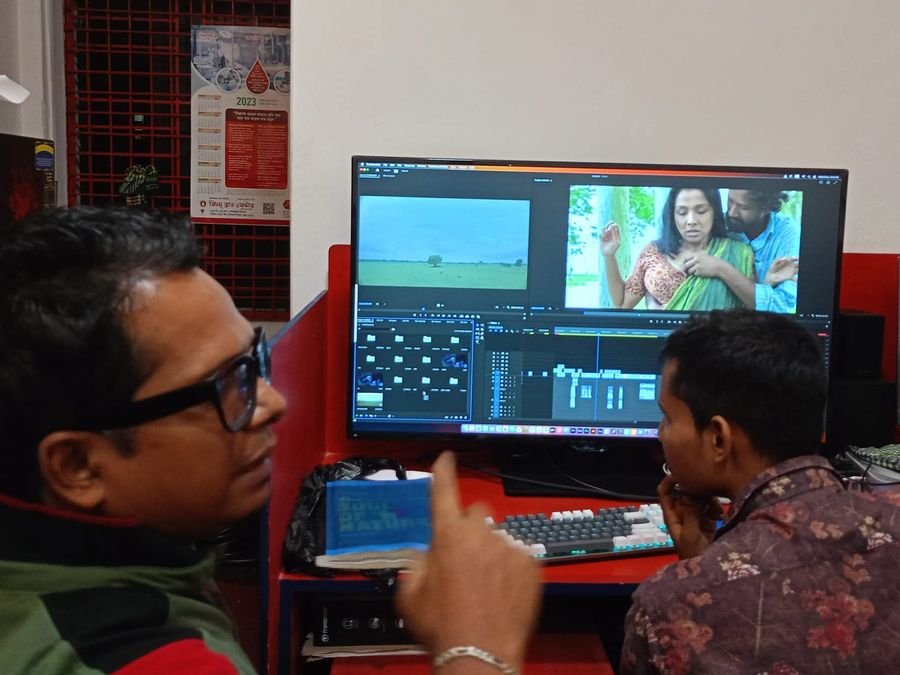
In the edit suite, during the making of Soul of Nature: BOK
In the edit suite, shaping the 87-minute festival cut.

Earlier sets

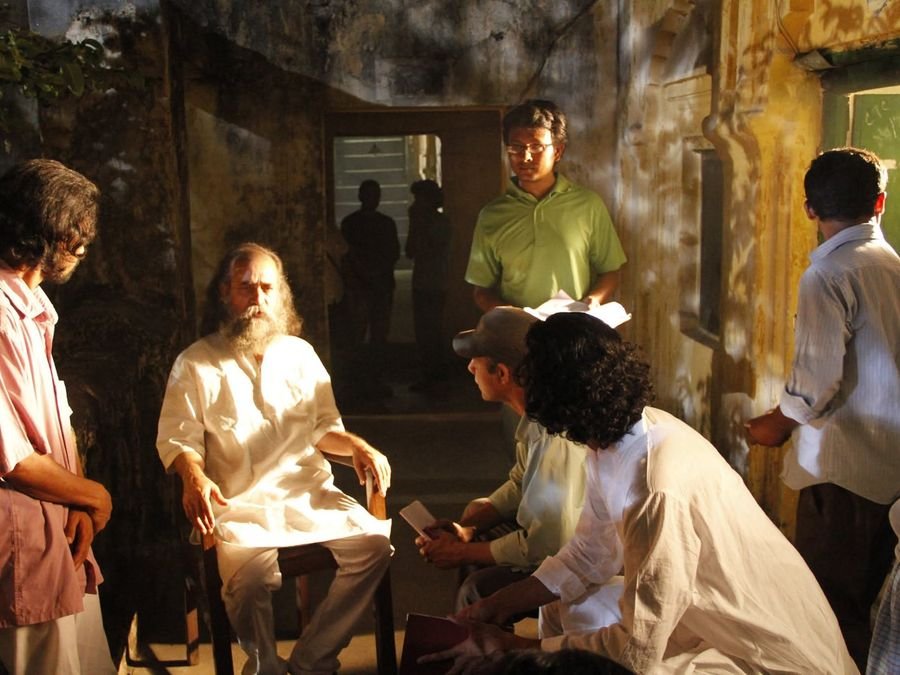
An old man in white sits on a chair in a crumbling courtyard while the director and crew prepare a scene
On set, an earlier feature.
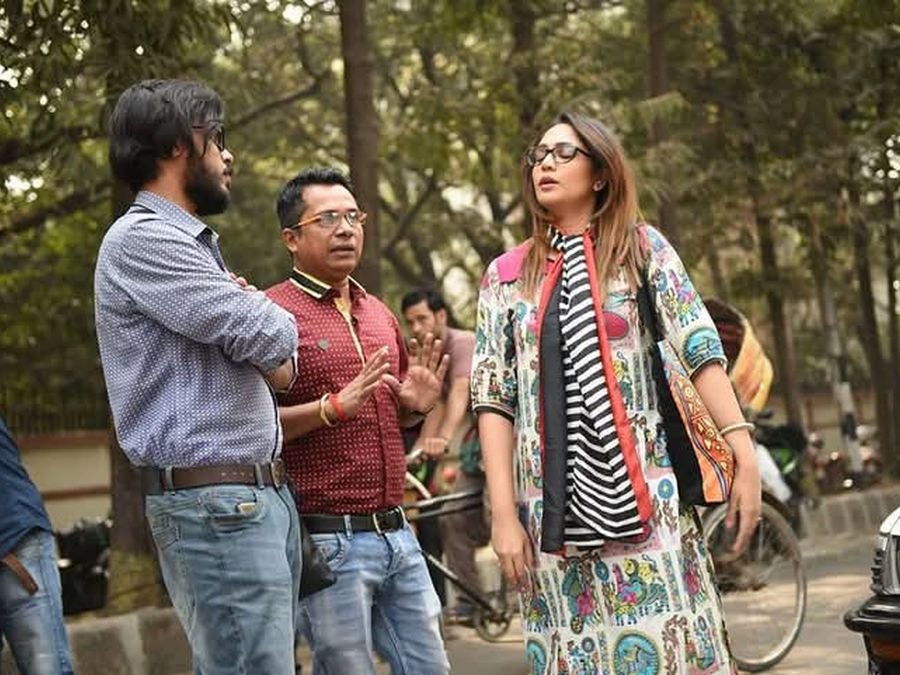
Masud Pathik directing two actors on a Dhaka street
Directing on location.
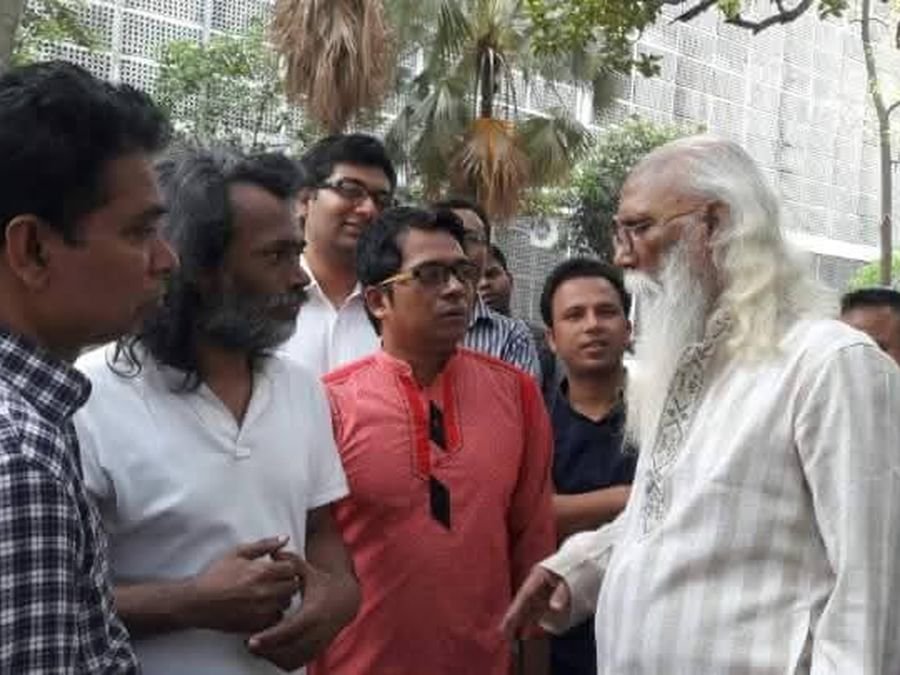
Masud Pathik among fellow artists outdoors
With fellow artists.

Reviews

Reviews and critical writing on the films will be collected here.

Next films

Three features are moving toward the camera.

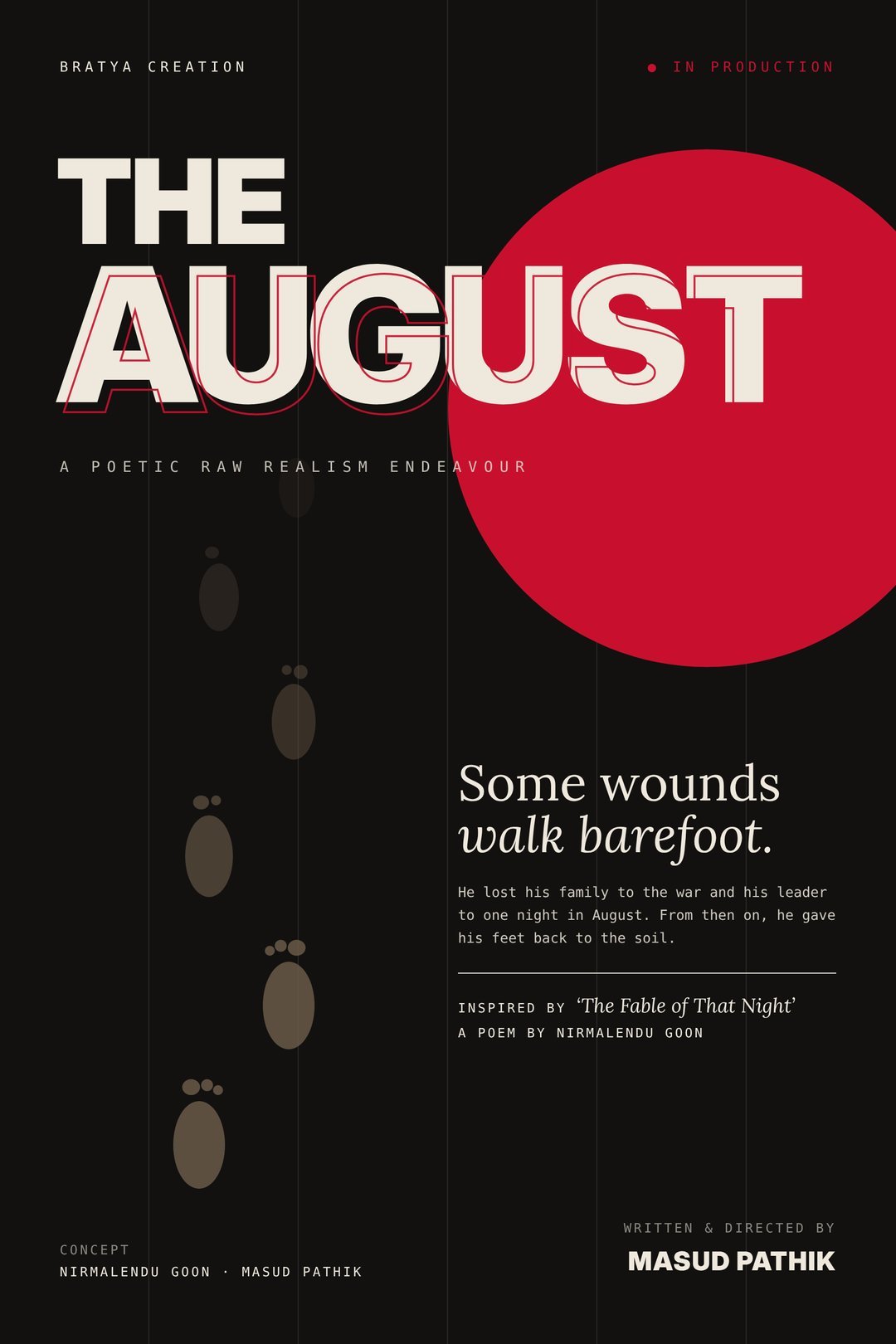
Poster for The August: barefoot footprints walking toward a red sun on black

The August

Feature, in production, with a Bangladesh government grant. Inspired by Nirmalendu Goon's poem The Fable of That Night.

A wounded freedom fighter. A family scattered by war. A country that lost its father on one night in August. After that night, he never wore shoes again, and walked the rest of his life barefoot on the soil.

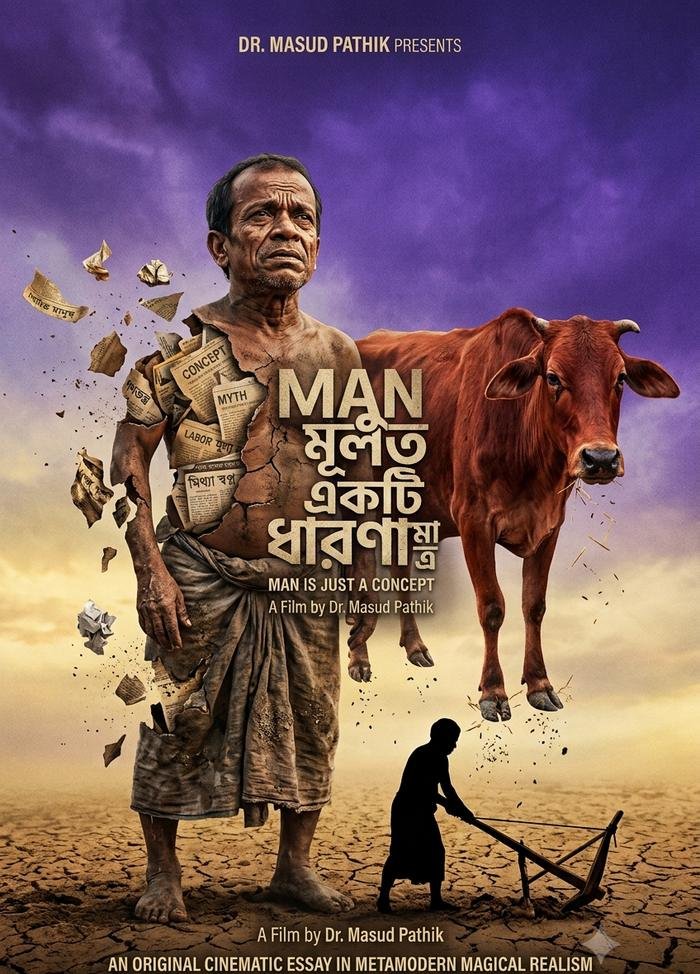
Poster for Man Is Just a Concept: an old farmer whose body breaks into newspaper scraps, beside a red bullock, on cracked earth

Man Is Just a Concept

Feature, about 75 minutes, without dialogue. Soon before the camera.

An orphan named Tamim has no one but his red bullock. A wordless, magic-realist film about hunger, kindness and the people a village forgets, told on a single stretch of land across past and present.

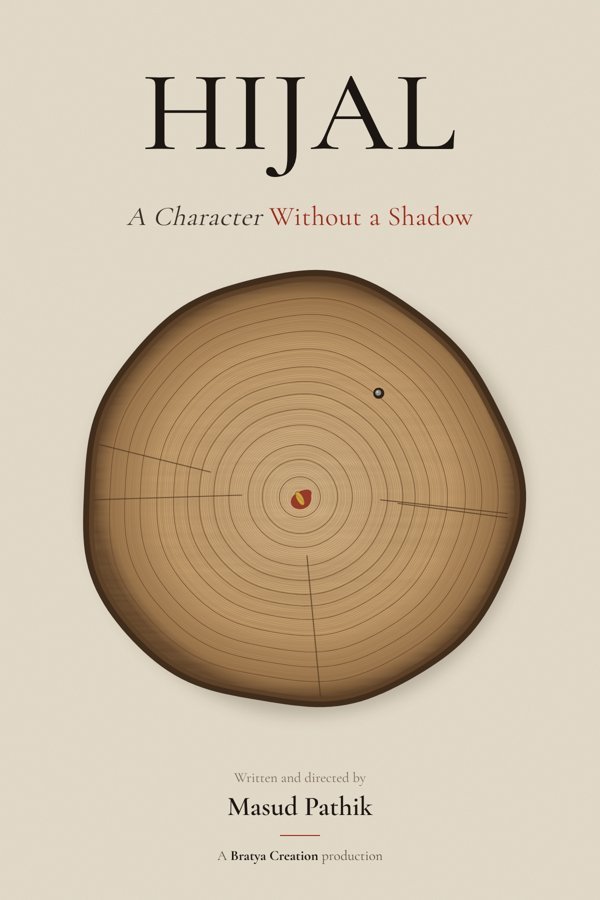
Poster for Hijal: A Character Without a Shadow, a felled tree seen from above with its rings, a bullet and a single grain of rice

Hijal: A Character Without a Shadow

Feature screenplay, 44 scenes, about 93 minutes. In development.

A gold-medal seed scientist loses his job, his wife and his son, and goes home to sow a nearly extinct rice. It yields eight maunds a bigha against the hybrid’s thirty. A hundred-year-old tree is sold for the price of a mother’s surgery, and the man who would not let it go stops speaking.

In development

Two projects now seeking co-producers, funds and labs.

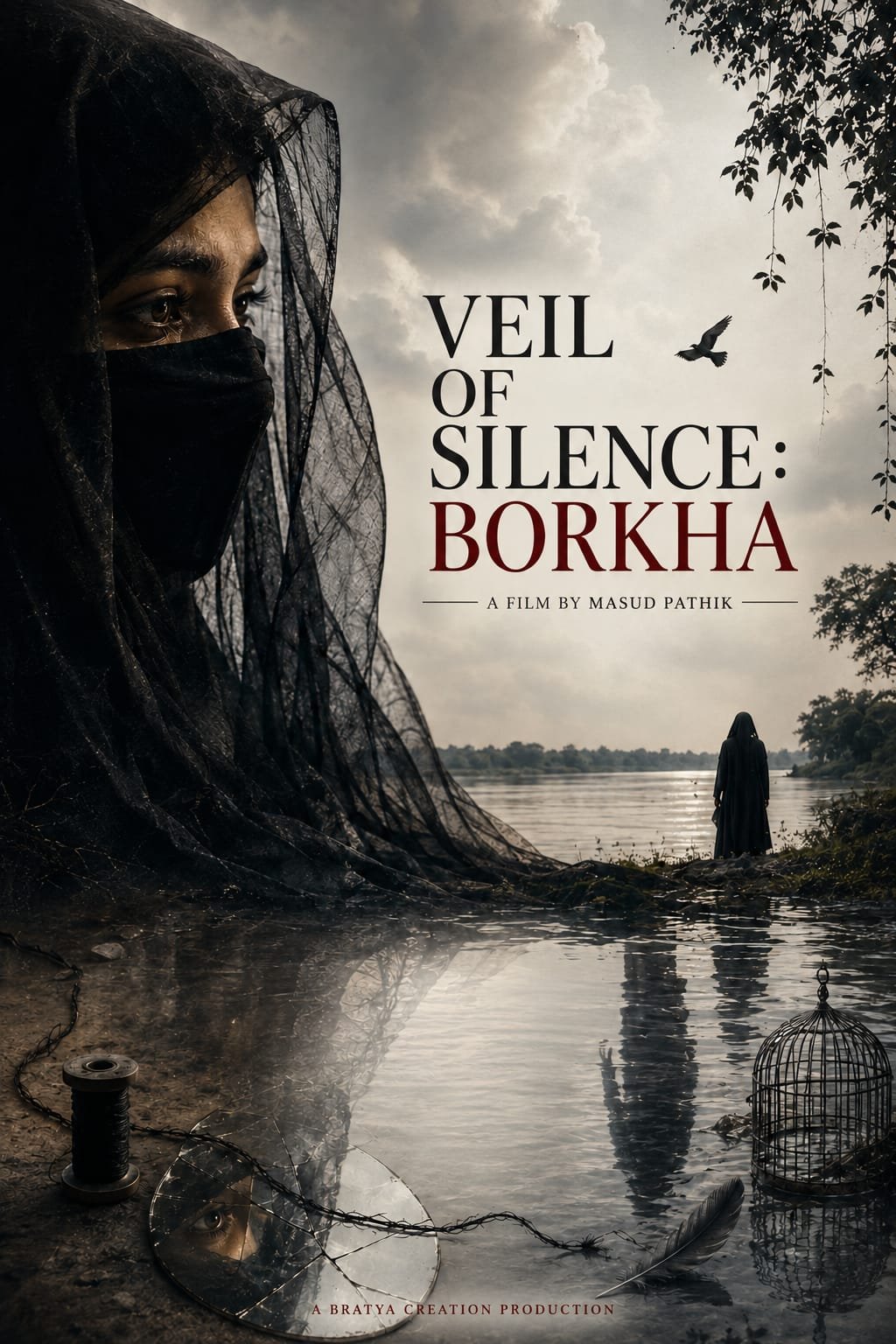
Poster for The Veil of Silence: a woman's eyes behind a black veil, a figure in a burqa by a river, a spool of thread and an empty bird cage

The Veil of Silence (Burkha)

Feature screenplay, about 88 minutes. Ecofeminist poetic cinema. In development, seeking co-producers.

A madrasa principal and village imam keeps four households and four wives, none of whom knows the whole of his life. When a relative assaults his daughter, the women begin to break their silence, and water, thread and birds carry what no one will say aloud. A metamodern poem-film on faith, the body and the land.

Poster for Suicide of Soil: a shrouded body lies on a river char under a trident, beneath a crescent moon

Suicide of Soil

Feature screenplay, 30 scenes, about 88 minutes. In development, seeking a European co-producer.

On the night the river takes the village, Haridas has no earth left to bury his wife and no wood to burn her. With his blind son Surdas and his small daughter Minoti, he carries her body across a land that is disappearing, while a leaning mosque on the bank keeps calling the hour. A poem-film on river erosion and the right to a grave.

More screenplays

More than thirty-five feature screenplays in development, including the four above. Scripts and treatments are available to producers, labs and funds on request.

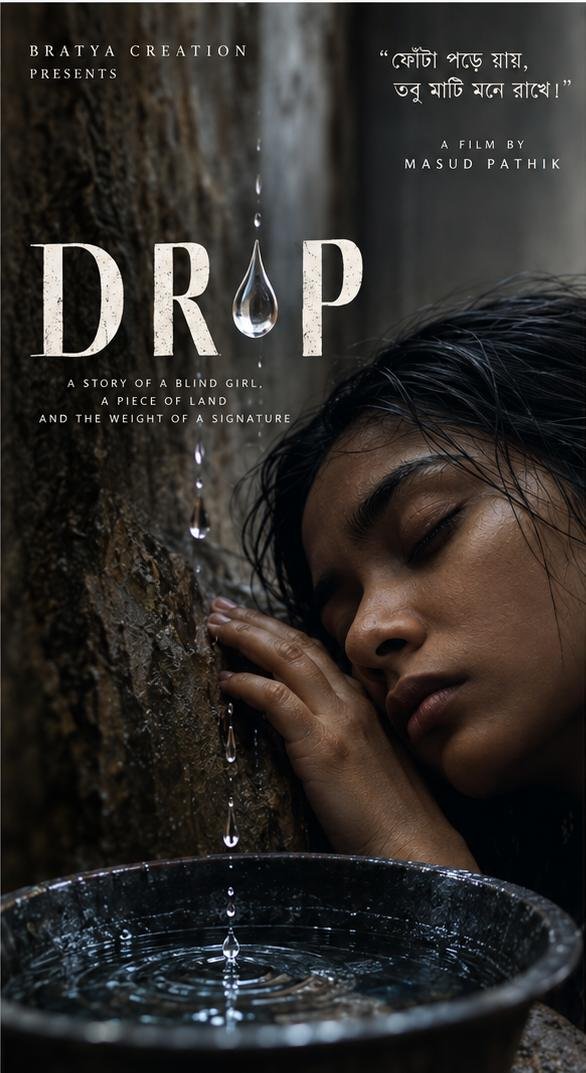
Poster for Drop: a blind young woman resting her head against a tree as water drips into a bowl

Drop

Feature screenplay, about 100 minutes. In development.

A blind girl, a piece of land and the weight of a signature. Set in a Dhaka boarding house, a sculpture studio and a mango orchard.